The deck narrates itself and advances on its own — SPACE to pause, A for manual control. Slide 13 plays the recorded walkthrough.
Press any key to start
ifcxp.editor™
A new way to work with BIM
Working with the IFC model natively — and in step with where the standard is going — without a proprietary format.
Patent applied for · HK short-term patent no. 32026128926.0 · Trade marks applied for · 307417459 / 307417477
The claim
The model should be the open standard itself.
Not a proprietary document that exports to it.
Everything after this slide is evidence for that one sentence.
What “native” replaces
Today's workflow is a chain of translations.
Author in one format → export → translate → import again
Every hand-off is a fidelity risk, and someone pays for it later
The data model is owned by the file format, not by the standard
If the model is the standard's own schema, there is nothing to translate away.
Why ifcxp.editor - The trigger · 1
Bonsai (formerly BlenderBIM)
A native IFC authoring platform, inside Blender — free and open source, built on IfcOpenShell.
Strengths
Proves the thesis: the native format is the open schema — there is no export step
Deep, data-rich IFC authoring through IfcOpenShell (LGPL-3.0)
A large open-source community behind it
AI-reachable through the Blender MCP ecosystem (~29k stars) — not first-party
Constraints
Shipped as a Blender add-on — a licence constraint on a proprietary path
Desktop and Blender-shaped: a heavy install, Blender idioms to learn
Not web-native — no browser, no link to send someone
No first-party MCP server of its own
It proved native IFC works in a real authoring tool. Its constraints — desktop, licence — are part of what shaped ours.
Why ifcxp.editor - The trigger · 2
Pascal Editor
A web-native BIM editor — React Three Fiber and WebGPU, MIT licensed, browser or CLI.
Strengths
Web-native: no install, runs in a browser, and a CLI for agents
MIT — the cleanest licence of the three, for any commercial path
AI-first by design: a first-party MCP server, agent CLI, skill bundles
~24,000 stars in eleven months: the appetite is real
Node schemas over a local-first store — a serious engineering model
Constraints
Its schema is its own — not IFC, and not IFCX
An architectural editor rather than a full authoring platform
Young: rapid change, and the agent setup assumes a CLI host
It proves the other half of the argument: a browser-native editor with agents in the loop is a real way to work. The difference we bring is the schema underneath.
Why ifcxp.editor - The trigger · 3
IFCX — and the decision to build.
A schema breakthrough: one format that is both machine-readable and human-readable
The AI moment: agents let a small team build and check what used to need a large one
The local need: an editor aligned to Hong Kong standards and requirements, not a foreign workflow
The ingredients: WebGPU, JSON and an IFCX schema extension — plus what we learned from the two tools above
So a small team, working with several AI agents, started building. That is the whole origin story.
The standard is not a file
It is a data schema.
“IFC data can be captured (serialised) in an .ifc file (STEP file format) or other formats like .ifcXML or .ifcZIP. However, the IFC standard is much more than just a file format. It is primarily a data schema explaining how to organise objects, their properties, relations and more.”
buildingSMART International — Industry Foundation Classes · archived snapshot 2026-08-08
Where the standard is going
IFC 5 has become IFC X — and it is web-based.
“Aus IFC 5 wird IFC X: Neuentwicklung mit webbasierten Technologien.” — IFC 5 becomes IFC X: a new development using web-based technologies.
buildingSMART Deutschland — “IFC-Roadmap nach Porto: Version 4.4 kommt, IFC 5 wird zu IFC X” · retrieved 2026-09-15
IFC 4.3 continues, IFC 4.4 is being finalised, and IFC X is the new line — web-based by design, rethinking data exchange from the ground up. A browser-native editor is not a bet against the standard. It is the shape the standard is taking.
What it does today
Working software, not a promise.
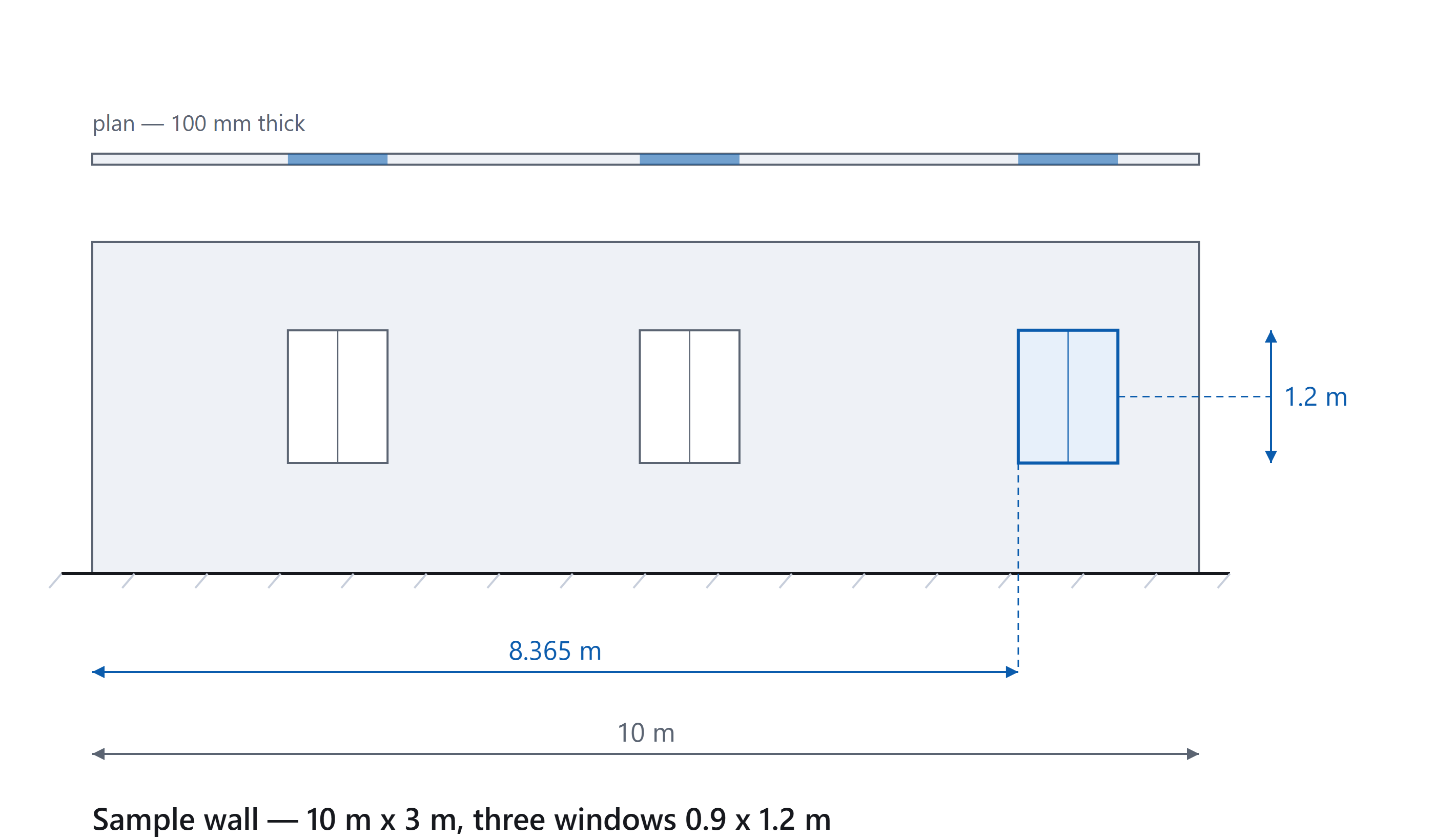
Plan and 3D editing in the browser — WebGPU, no installation
Walls that resolve joins from inner and outer edge intersections, never centrelines
Doors and windows that cut hosted voids, and count correctly
Abridged from examples/Hello Wall/advanced/3rd-window.ifcx — the model's own data, not a mock-up.
The joinery principle
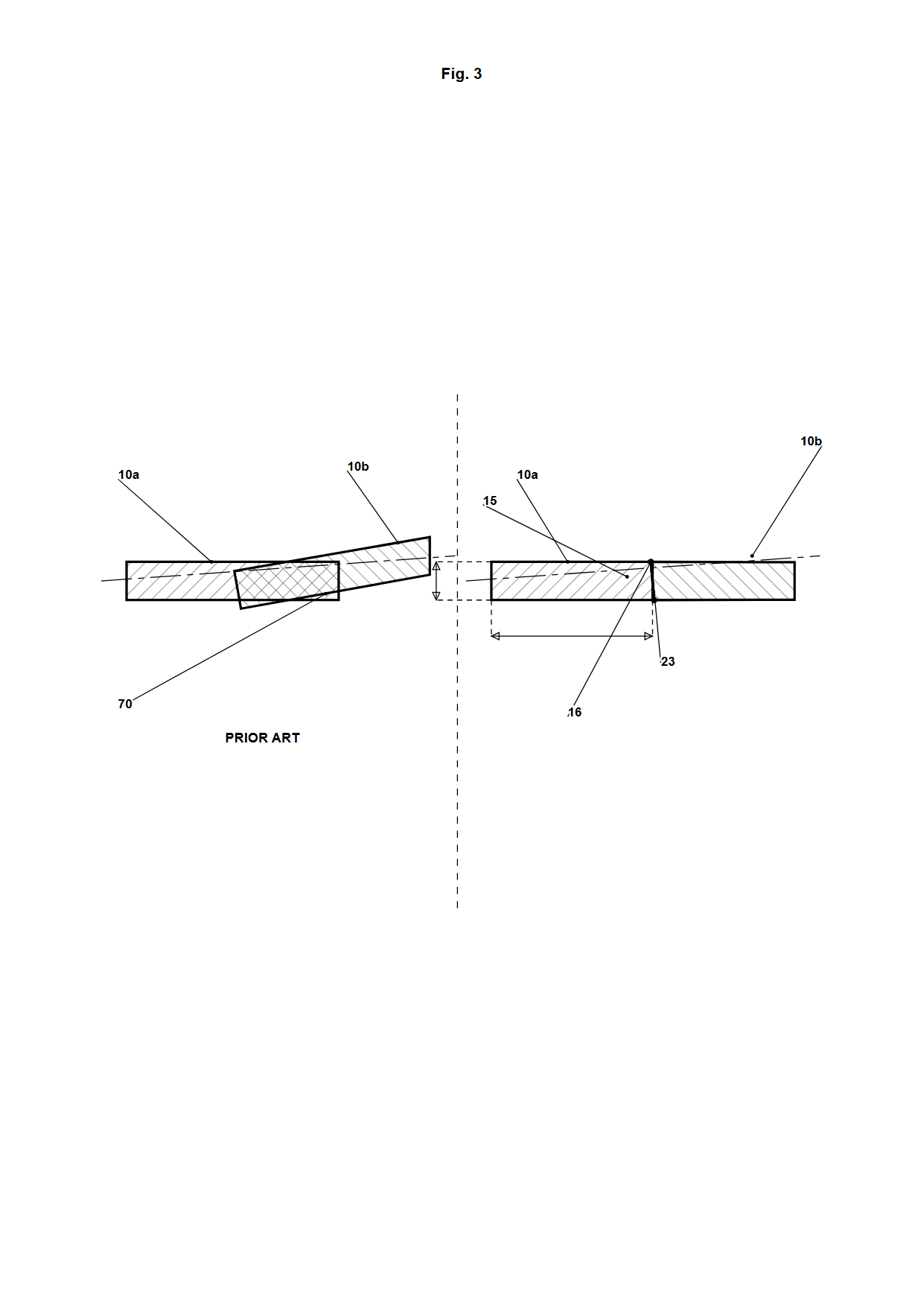
Two walls meeting is four lines, not two.
Where those four lines intersect is what decides the geometry.
Solve it from the edges, and the quantity is right by construction — not by a correction applied afterwards.
Near-180° comparison — conventional lap extension against the mitered joint.
Quantities you can defend
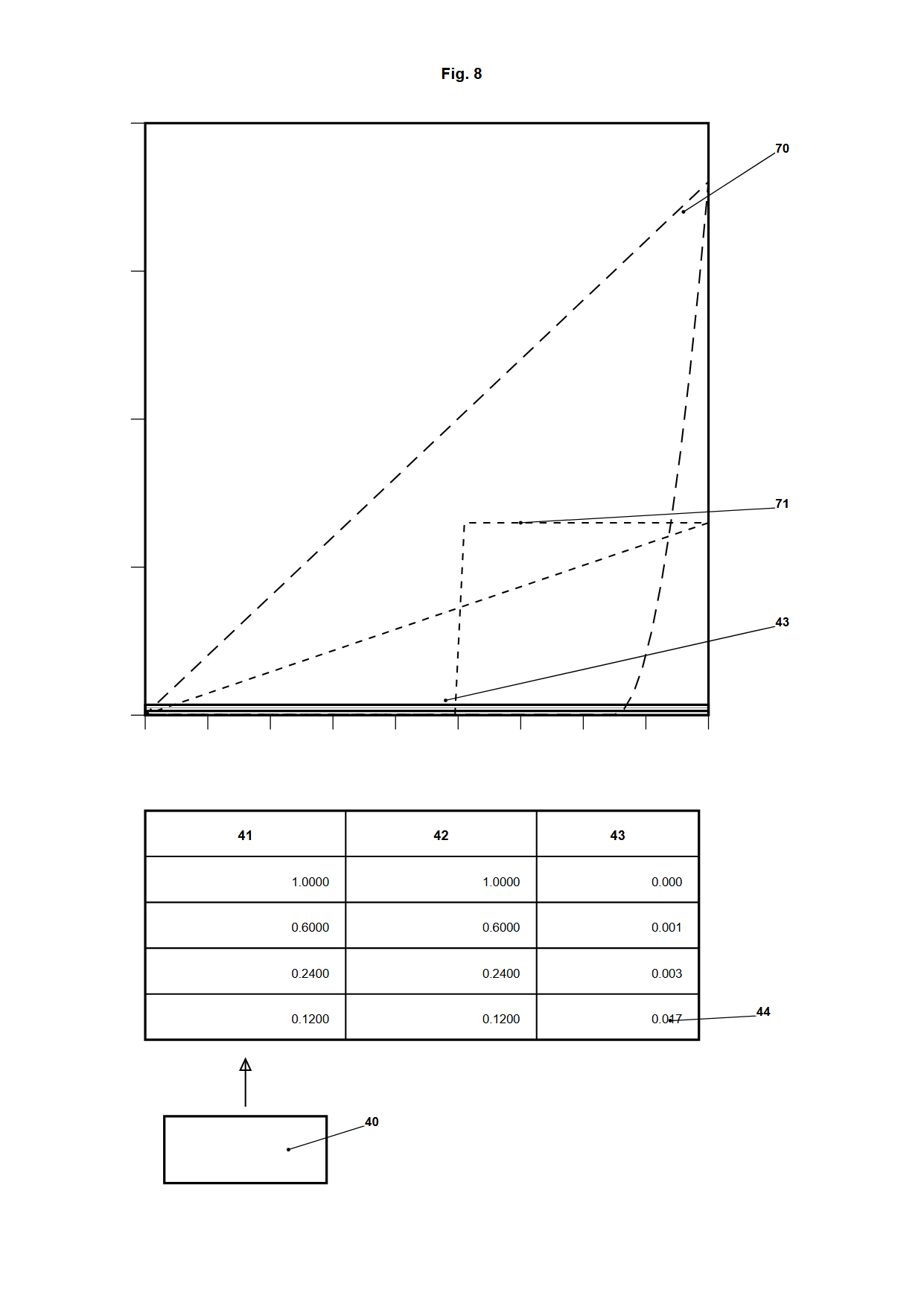
Measured, not asserted.
The fused volume is compared against the nominal sum, per group.
Bills of quantities are where trust is won or lost. A deviation you can quote beats a claim you cannot.
Parity audit — deviation from the nominal sum, plotted and tabulated.
The workflow, end to end
Place → join → open → quantify.
A recorded walkthrough on the sample model — the wall, its openings, the join, the quantities, then an air-conditioning run. Nothing here can stall on the day; the deck carries on when it ends.
A design position
Built for the professional, not instead of one.
The machine proposes; the engineer decides
Suggest → validate → explain. Never auto-commit
Automation that crosses a professional's judgement is not a feature
The honest slide
What is not there yet.
No IFC4 import — the files most of the market holds today
No automatic routing for services, deliberately
No drawings or schedules yet
Early software, small team with future roadmap
You would have found these out in the questions anyway. Better from me, first.